
Choosing the right tiles for your bathroom is one of the most important decisions in any bathroom renovation project. The bathroom is a high-moisture environment that requires tiles that are not only beautiful but also durable, water-resistant, and easy to maintain. With countless options available in the market, selecting the perfect tiles can feel overwhelming.

This comprehensive guide will help you understand the best tile options for your bathroom interior and make an informed decision.
Why Tile Selection Matters for Bathrooms
Your bathroom tiles need to withstand daily exposure to water, humidity, temperature changes, and cleaning products. The right tiles will last for decades while maintaining their appearance and functionality. Poor tile choices can lead to water damage, mold growth, slippery surfaces, and costly repairs. Additionally, tiles significantly impact the overall aesthetic of your bathroom, affecting both its visual appeal and resale value.
Top Tile Types for Bathroom Interiors
Ceramic Tiles
Ceramic tiles remain one of the most popular choices for bathroom interiors, and for good reason. These tiles are made from clay that’s fired at high temperatures, creating a durable and water-resistant surface. Ceramic tiles are available in countless colors, patterns, and finishes, making them incredibly versatile for any design style.
The affordability of ceramic tiles makes them accessible for most budgets without compromising on quality. They’re relatively easy to install and maintain, requiring only regular cleaning with mild detergents. However, ceramic tiles can chip or crack if heavy objects are dropped on them, so careful handling during installation and use is important.
Porcelain Tiles
Porcelain tiles are essentially a more refined version of ceramic tiles, made from finer clay and fired at higher temperatures. This process creates an extremely dense, hard, and less porous material that’s ideal for bathrooms. Porcelain tiles offer superior water resistance compared to ceramic, making them perfect for wet areas like shower floors and walls.
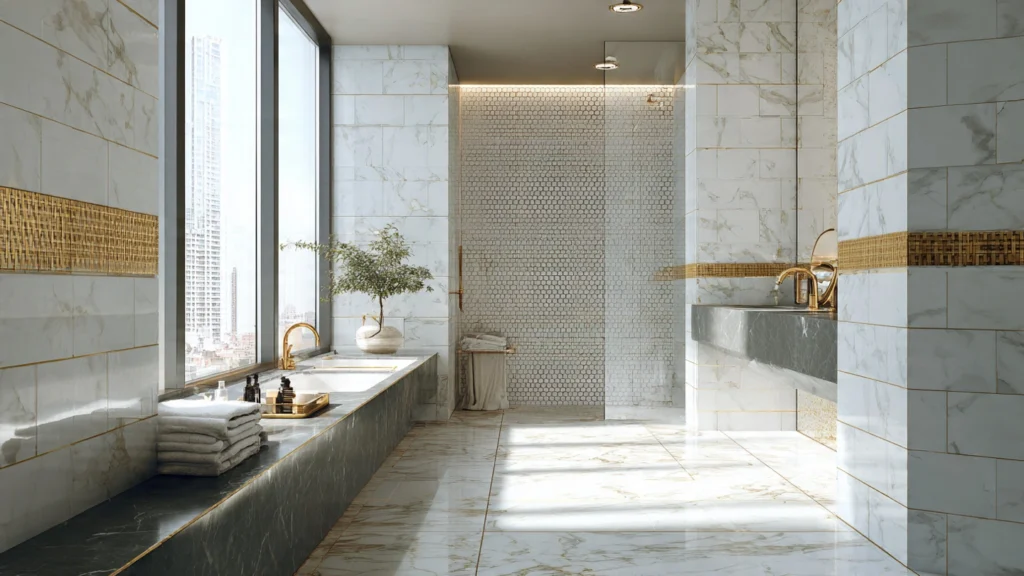
These tiles are highly durable and scratch-resistant, maintaining their appearance even after years of use. While porcelain tiles are more expensive than ceramic, their longevity and performance often justify the investment. They’re available in various finishes including matte, polished, and textured surfaces that can mimic natural stone or wood.
Natural Stone Tiles
Natural stone tiles bring timeless elegance and luxury to bathroom interiors. Options like marble, granite, travertine, and slate each offer unique characteristics and visual appeal. Marble tiles create a sophisticated, high-end look with their distinctive veining patterns, while granite provides exceptional durability and resistance to staining.
Natural stone requires more maintenance than ceramic or porcelain tiles. These tiles need to be sealed regularly to prevent water absorption and staining. Despite the extra care required, many homeowners choose natural stone for its unmatched beauty and the value it adds to their homes.
Glass Tiles
Glass tiles have gained popularity in modern bathroom designs, particularly as accent features or in shower areas. These tiles reflect light beautifully, making small bathrooms appear larger and brighter. Glass tiles are completely waterproof and resistant to stains, mold, and mildew, making them hygienic choices for wet environments.
While glass tiles are stunning, they can show water spots and fingerprints more easily than other materials. They’re best used as accent walls, backsplashes, or decorative borders rather than for entire floors where they might become slippery when wet.
Mosaic Tiles
Mosaic tiles are small tiles, typically less than 2 inches in size, arranged in patterns or designs. They’re available in various materials including ceramic, porcelain, glass, and natural stone. Mosaics are excellent for adding visual interest to bathroom floors, shower walls, or as decorative accents.
The small size of mosaic tiles means more grout lines, which can be more challenging to clean but also provides better slip resistance on floors. These tiles work particularly well on curved surfaces and can create stunning artistic effects in bathroom designs.
Vinyl Tiles
Luxury vinyl tiles (LVT) have improved dramatically in recent years, offering realistic looks that mimic natural materials at a fraction of the cost. Vinyl tiles are warm underfoot, comfortable to walk on, and highly water-resistant. They’re also relatively easy to install, making them popular for DIY bathroom renovations.
While vinyl tiles are budget-friendly and practical, they may not add as much value to your home as natural materials. However, their comfort, warmth, and ease of replacement make them worth considering, especially for family bathrooms.
Factors to Consider When Choosing Bathroom Tiles
Water Resistance and Absorption Rate
The most critical factor for bathroom tiles is their water absorption rate. Look for tiles with low porosity ratings. Porcelain and glass tiles have the lowest absorption rates, making them ideal for shower areas and floors. The industry standard measures this through the Water Absorption Classification, with Class 1 (less than 0.5% absorption) being best for bathrooms.
Slip Resistance
Safety should never be compromised in bathroom design. Choose tiles with appropriate slip resistance ratings, especially for floor applications. Textured or matte-finish tiles generally provide better traction than highly polished surfaces. Look for tiles with a Dynamic Coefficient of Friction (DCOF) rating of 0.42 or higher for wet areas.
Durability and Maintenance
Consider how much time and effort you’re willing to invest in tile maintenance. Porcelain and ceramic tiles are low-maintenance options, while natural stone requires regular sealing and specialized cleaning products. Think about the bathroom’s usage level as well since high-traffic bathrooms need more durable tiles.
Size and Layout
Tile size affects both aesthetics and functionality. Large-format tiles create a modern, seamless look with fewer grout lines, making cleaning easier. However, they require perfectly level surfaces for installation. Smaller tiles are better suited for uneven surfaces and provide more design flexibility but require more grout maintenance.
Color and Design
Your tile choice should complement your overall bathroom design scheme. Light-colored tiles make small bathrooms feel more spacious, while darker tiles can create a dramatic, spa-like atmosphere. Consider how the tiles will look with your fixtures, vanity, and lighting.
Best Tiles for Different Bathroom Areas
Bathroom Floors
For bathroom floors, prioritize slip resistance and durability. Porcelain tiles with textured or matte finishes are excellent choices. Natural stone tiles like slate or honed granite also work well. Avoid highly polished tiles that become dangerously slippery when wet.
Shower Walls and Floors
Shower areas require the most water-resistant tiles. Porcelain tiles are ideal for both shower walls and floors. For shower floors specifically, smaller tiles like mosaics provide better slip resistance due to increased grout lines. Glass tiles work beautifully on shower walls but should be avoided on floors.
Bathroom Walls
Walls can accommodate a wider range of tile options since they don’t face the same moisture and traffic demands as floors. Ceramic tiles are perfect for bathroom walls, offering endless design possibilities at reasonable prices. This is also where you can incorporate decorative glass tiles or create accent walls with unique patterns.
Popular Tile Trends for Bathrooms in 2025
Current trends favor large-format tiles that create seamless, minimalist looks. Wood-look porcelain tiles continue to gain popularity, bringing warmth to bathrooms without the maintenance concerns of real wood. Geometric patterns and hexagonal tiles are making strong comebacks in modern bathroom designs.
Natural stone finishes and earthy tones are trending as homeowners seek to create spa-like retreats. Terrazzo tiles have resurged with contemporary color palettes. Mixing different tile sizes and textures within the same space is another popular approach that adds visual depth and interest.
Installation Tips for Bathroom Tiles
Proper installation is crucial for tile performance and longevity. Always ensure your substrate is properly waterproofed before tiling, especially in wet areas. Use appropriate thin-set mortar and grout for your specific tile type. Allow adequate time for mortar to cure before grouting.
Consider hiring professional installers for complex patterns, large-format tiles, or natural stone installations. While DIY installation can save money, mistakes can be costly to fix. Professional installation also typically comes with warranties that protect your investment.
Maintenance and Care for Bathroom Tiles
Regular maintenance keeps your bathroom tiles looking beautiful for years. Ceramic and porcelain tiles require simple cleaning with mild detergents and regular sweeping or vacuuming. Natural stone tiles need pH-neutral cleaners and periodic resealing to maintain their protective barrier.
Address grout maintenance promptly by cleaning grout lines regularly and resealing them annually. This prevents mold growth and water penetration. For any chips or cracks, repair them immediately to prevent water damage to underlying surfaces.
Budget Considerations
Bathroom tile costs vary dramatically based on material, size, and complexity. Ceramic tiles are the most budget-friendly option, starting around $1-3 per square foot. Porcelain tiles range from $3-10 per square foot, while natural stone can cost $5-30 or more per square foot. Remember to factor in installation costs, which often equal or exceed material costs.
Consider where to splurge and where to save. You might choose high-end tiles for focal points like shower walls while using more affordable options for floors or less visible areas. Always purchase 10-15% extra tiles to account for cuts, breakage, and future repairs.
Conclusion
Selecting the best tiles for your bathroom interior involves balancing aesthetics, functionality, durability, and budget. Porcelain tiles offer the best overall performance for most bathroom applications, combining water resistance, durability, and design versatility. Ceramic tiles provide excellent value for budget-conscious renovations, while natural stone creates unmatched luxury for those willing to invest in maintenance.
Consider your specific needs, bathroom layout, and personal style preferences when making your selection. Whether you choose modern porcelain, classic ceramic, elegant natural stone, or a combination of materials, the right tiles will transform your bathroom into a beautiful, functional space that serves you well for many years to come.
Also Read: Which interior design style increases home value?