
When it comes to creating beautiful, functional spaces, interior designers around the world follow one fundamental principle that stands above all others: balance. This golden rule serves as the foundation for every successful interior design project, whether you’re decorating a cozy bedroom or designing a grand commercial space.

Balance in interior design refers to the equal distribution of visual weight in a room. It’s about creating harmony and equilibrium so that no single area feels too heavy or too light, too cluttered or too empty. When a space is properly balanced, it feels comfortable, inviting, and aesthetically pleasing to anyone who enters.
Understanding Visual Weight
Visual weight is the perceived heaviness or lightness of objects in a space. Dark colors, large furniture pieces, bold patterns, and complex textures all carry more visual weight than their lighter counterparts. A large, dark wooden bookshelf will naturally draw more attention and feel “heavier” than a delicate glass side table. Understanding this concept is crucial to achieving proper balance.
The Three Types of Balance
Interior designers work with three distinct types of balance, each creating a different atmosphere and serving different design goals.
Symmetrical balance is the most traditional and formal approach. It involves mirroring elements on either side of a central axis. Think of identical nightstands flanking a bed, matching table lamps on a mantel, or two identical chairs facing each other across a coffee table. This type of balance creates a sense of order, stability, and formality that works beautifully in traditional and classic interiors.
Asymmetrical balance offers a more modern, dynamic approach. Instead of mirroring identical items, asymmetrical balance uses different objects with equal visual weight. For example, you might balance a large sofa on one side of the room with two smaller chairs and a tall plant on the other side. This approach requires a more trained eye but results in spaces that feel more relaxed, contemporary, and interesting.
Radial balance is less common but equally important. It involves arranging elements around a central focal point, like chairs around a circular dining table or pendant lights radiating from a central ceiling medallion. This creates a sense of movement and draws attention to the room’s center.
Why Balance Matters
The importance of balance extends far beyond aesthetics. A well-balanced room affects how we feel and function within a space. When balance is achieved, our eyes can move comfortably around the room without getting stuck or feeling overwhelmed. We subconsciously feel more relaxed and at ease.
Conversely, unbalanced spaces can create psychological discomfort. A room with all the furniture pushed to one side feels unstable and awkward. A space with too many heavy, dark elements can feel oppressive, while too many light, delicate pieces might seem insubstantial or incomplete.
Applying the Golden Rule in Practice
Achieving balance requires considering multiple design elements simultaneously. Color balance ensures that bold hues are distributed throughout the space rather than concentrated in one area. If you have a vibrant blue accent wall, consider adding blue accessories or artwork elsewhere in the room to create visual continuity.
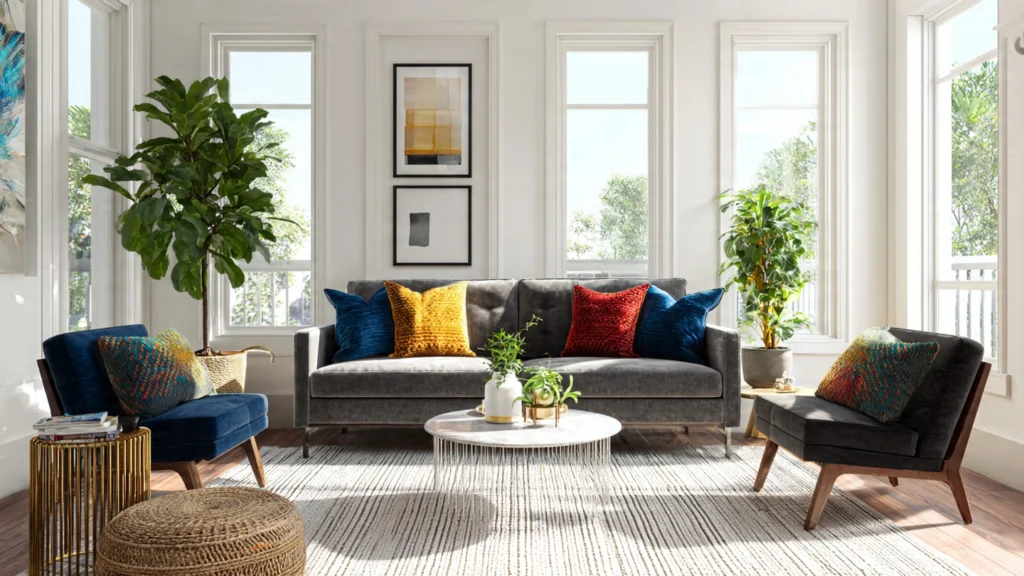
Texture balance prevents monotony while maintaining harmony. Mix smooth surfaces with rough ones, soft fabrics with hard materials, and matte finishes with glossy ones. A room with only smooth, polished surfaces feels cold, while too many rough textures can seem chaotic.
Scale and proportion balance involves varying the sizes of furniture and decor items. A room filled with only large pieces feels cramped, while a space with only small items lacks impact. Combine different scales thoughtfully—pair that substantial sectional sofa with delicate throw pillows, or balance a large dining table with a refined chandelier overhead.
Common Balance Mistakes to Avoid
Many homeowners inadvertently create unbalanced spaces by pushing all furniture against walls, leaving a vast empty center. Others collect too many accessories without considering their distribution, resulting in cluttered surfaces on one side and bare spaces on the other.
Another frequent mistake is ignoring vertical balance. While we often focus on horizontal arrangement, we must also consider how elements are distributed from floor to ceiling. Hanging artwork too high, using only low furniture, or failing to draw the eye upward with tall plants or vertical decor creates an unbalanced vertical plane.
The Relationship Between Balance and Other Design Principles
The golden rule of balance doesn’t exist in isolation. It works in concert with other fundamental principles like rhythm, proportion, emphasis, and unity. A focal point might intentionally receive more visual weight, but the rest of the room must balance around it. Repetition creates rhythm while contributing to overall balance.
Understanding that balance is the golden rule helps you make confident design decisions. When something feels “off” in a room, it’s often a balance issue. By stepping back and assessing the visual weight distribution, you can identify whether you need to add, remove, or relocate elements.
Creating Your Balanced Space
Start by identifying your room’s focal point—this could be a fireplace, a large window, or a statement piece of furniture. Arrange other elements to support and balance this focal point rather than compete with it. Consider the room from multiple viewpoints, not just the main entrance, ensuring balance from every angle.
Don’t rush the process. Balance often requires trial and error, rearranging furniture, swapping accessories, and sometimes removing elements entirely. Take photos of your space to see it from a fresh perspective—cameras often reveal imbalances that our eyes might miss in person.
Remember that balance doesn’t mean boring or predictable. The most interesting interiors maintain balance while incorporating personality, surprise, and creativity. Asymmetrical balance, in particular, allows for exciting combinations while still adhering to the golden rule.
Conclusion
The golden rule of interior design—balance—is both simple and complex. Simple in concept, as it asks us to distribute visual weight evenly throughout a space. Complex in execution, as it requires considering color, texture, scale, pattern, and placement simultaneously. Mastering this principle transforms ordinary rooms into extraordinary spaces that look professionally designed and feel intuitively comfortable.
Whether you’re redesigning a single room or your entire home, return to this golden rule whenever you feel uncertain. Ask yourself: Is this space balanced? Does visual weight distribute evenly? By prioritizing balance in every design decision, you’ll create interiors that stand the test of time and truly feel like home.